
Understanding Your Financing Options
Owning a manufactured or modular home is often more achievable than many buyers expect. Financing plays a key role in the process, and understanding how it works early helps avoid surprises later.
How to Finance Your Home
Our role is to educate and support you through the planning process. Financing decisions are always made between you and your chosen lender, but we’re here to help you understand how home type, site conditions, and installation details can affect available options. Financing decisions are made solely between the borrower and their chosen lender.
Common Financing Paths
For most new manufactured and modular home projects, clients will require a construction loan.
A construction loan is a short-term loan used to finance the building and installation phase of the home.
During construction, funds are typically released in stages (often called draws) as work is completed. Once the
home is finished and all required inspections are complete, the construction loan is either paid off or converted
into a long-term mortgage, depending on the lender and loan structure.
When Construction Loans are Commonly Used:
A new home is being built or installed on a site
Land is being purchased as part of the project
Site work, foundation, and installation are included in the scope.
Additional Loan Options Available for Your Project
Conventional Loans
Commonly used for modular homes placed on permanent foundations and classified as real property. These loans often mirror traditional site-built home financing.
FHA Loans
Government-insured loans that may allow for lower down payments and more flexible credit requirements. Manufactured homes must meet HUD standards and installation guidelines.
VA Loans
Available to eligible veterans and service members. These programs may offer low- or no-down-payment options for qualifying homes and properties.
Chattel (Personal Property) Loans
Often used for manufactured homes that are not permanently affixed to land. These loans typically have shorter terms and different rate structures than real-property loans.
The type of home you choose, how it is installed, and how it is classified all influence financing. Loan availability and terms vary by lender, borrower qualifications, home type, foundation, and land status.
What Lenders Typically Evaluate
Phil & Lee’s helps ensure that home specifications and site details are clearly documented so lenders have accurate information during the review process. Some lenders set their own criteria; most look at the following.
- Credit profile and payment history
- Down payment and available assets
- Debt-to-income ratio
- Home type, foundation and installation method
- Land ownership or lease structure

If you have any questions about financing or loan options, please let us know and we will be here to guide you through the process.
Phil & Lee’s Homes
A Typical Financing Timeline
Throughout this process, we coordinate with your lender as needed to provide specifications, pricing details, and timelines.
Define a Comfortable Budget
Consider your full monthly picture, including mortgage, utilities, insurance, and ongoing housing costs.
Explore Financing Options Early
Many clients choose to speak with lenders early to understand available programs, requirements, and estimated payment ranges.
Pre-Approval
A pre-approval helps clarify your purchasing range and supports confident home selection.
Final Loan Review & Approval
Once the home, foundation, and site details are finalized, lenders complete underwriting and approval.
Planning Tips to Keep Projects on Track
When planning a home purchase, it’s important to focus on long-term affordability rather than just the current interest rate. Buyers should understand how refinancing opportunities may work in the future, consider how energy-efficient homes can significantly reduce ongoing monthly operating costs, and recognize that thoughtful planning early in the process helps prevent costly delays or complications later on.
- Focus on long-term affordability, not just interest rates
- Understand how refinancing may work in the future
- Energy-efficient homes can help reduce monthly operating costs
- Early planning helps avoid last-minute delays
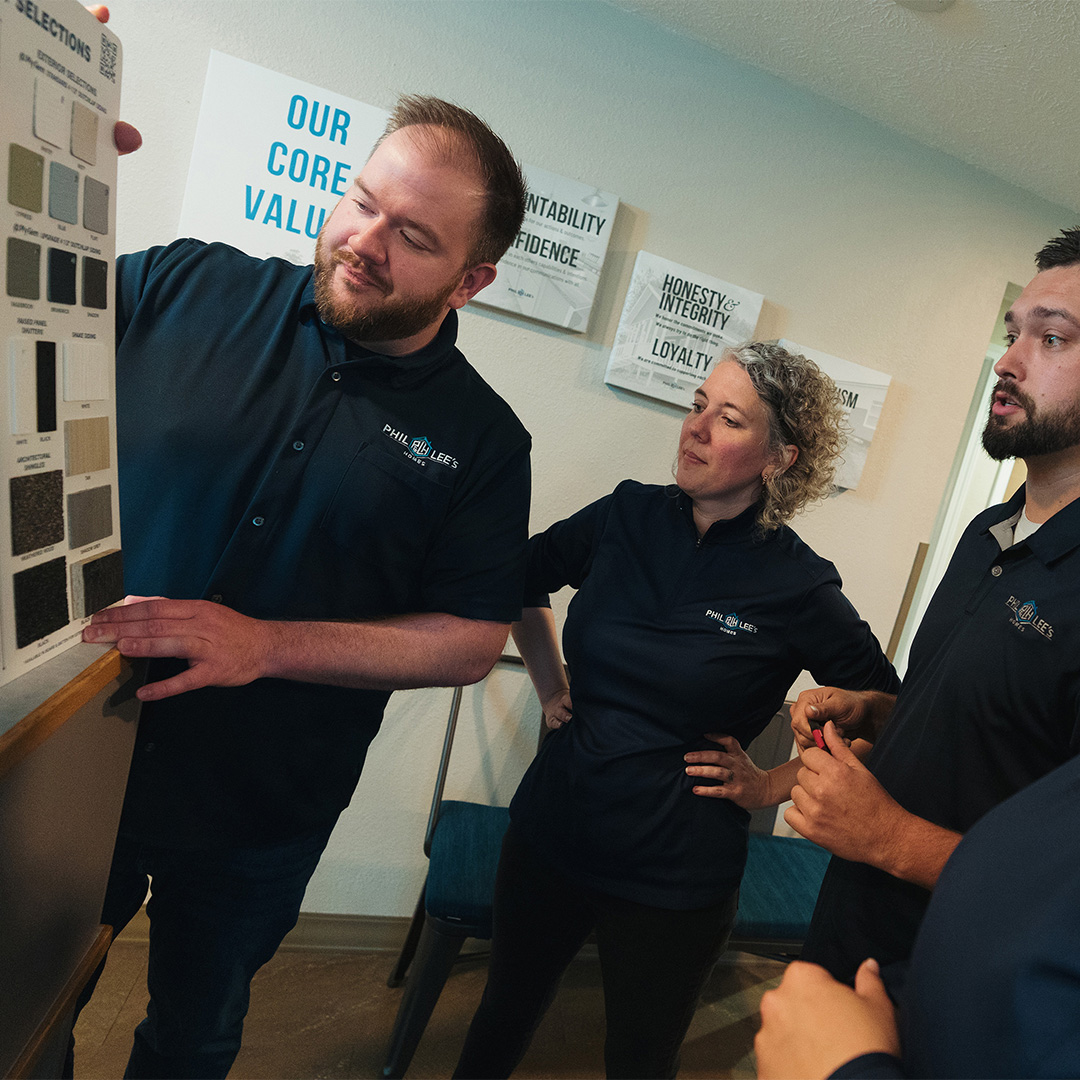
Planning is always a great idea. Phil & Lee’s are there to make sure your project is as smooth as possible.
Phil & Lee’s

What to Know About Financing Your Home
Phil & Lee's has financing to assist you on your journey and to make this process as seamless as possible. Here are a few key notes to understand.
Financing options depend on the home, site, and borrower—not the builder.
Early conversations with lenders often lead to smoother projects.
Home type and foundation choices can expand or limit loan options.
We support the process by coordinating details and documentation.